
MILITARY UNIFORM GUIDE SERIES · PART 01
A Professional Guide to Military Uniforms
ACU vs. BDU Uniforms: Key Differences, Features, and Applications
By KMS Operational Team | NOVEMBER 7, 2026
Military uniforms are designed to meet specific requirements for durability, functionality, mobility, and operational use. Among the most recognized styles of military clothing are the Army Combat Uniform (ACU) and the Battle Dress Uniform (BDU).
Although these two uniform types share similar characteristics, they differ in their historical development, design features, camouflage patterns, and functional details. Understanding these differences is important for military equipment distributors, uniform wholesalers, procurement professionals, and brands sourcing military-style apparel.
For businesses purchasing uniforms in bulk, selecting between ACU and BDU styles involves more than appearance. Fabric construction, garment specifications, customization requirements, and intended applications all influence the final product.
In this guide, we explore the differences between ACU and BDU uniforms, examine their key features, and explain what wholesale buyers should consider when sourcing or customizing these products.
1. What Is an ACU Uniform?
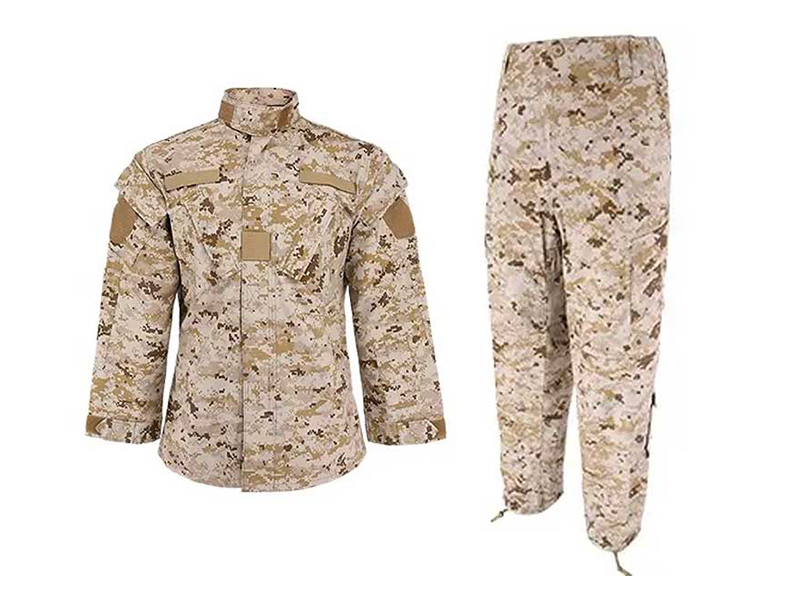
ACU stands for Army Combat Uniform. It was introduced by the U.S. Army in 2004 as a new combat and utility uniform designed to improve functionality and ergonomics compared with the earlier Battle Dress Uniform.
The ACU was developed with an emphasis on practical garment construction, accessibility of equipment, and adaptability to different operational requirements.
Unlike traditional uniform designs, the ACU introduced several functional modifications, including redesigned pocket configurations, updated closures, reinforcement areas, and features intended to work with individual protective and load-bearing equipment.
Key Features of ACU Uniforms
1. Functional Pocket Configuration
ACU-style uniforms typically feature multiple storage areas designed for practical use.
Common features include:
- Angled chest pockets
- Upper sleeve pockets
- Cargo pockets on trousers
- Additional utility compartments
- Functional closures for secure storage
Pocket placement and access are important considerations when designing uniforms intended to be worn with tactical equipment.
2. Updated Garment Construction
ACU designs introduced several construction changes compared with traditional BDU uniforms.
Depending on the specific version, these may include:
- Front zipper closures
- Hook-and-loop fastening systems
- Adjustable cuffs
- Reinforced elbow and knee areas
- Additional compartments for protective inserts
These features provide greater flexibility in garment configuration and customization.
3. Camouflage Pattern Options
ACU uniforms have been associated with several camouflage patterns throughout their development.
The original U.S. Army ACU was introduced with the Universal Camouflage Pattern (UCP). Later, the Army transitioned to the Operational Camouflage Pattern (OCP).
It is important to understand that ACU refers to the uniform design, not a single permanent camouflage pattern.
For commercial manufacturing and wholesale sourcing, ACU-style uniforms may be developed in different camouflage patterns according to customer requirements.
4. Fabric and Comfort Considerations
Military uniform fabrics need to balance durability, comfort, breathability, and ease of maintenance.
Depending on the intended application, ACU-style garments can be manufactured using different fabric compositions and constructions, including cotton-polyester blends and cotton-nylon ripstop fabrics.
The specific material should be selected according to the buyer’s performance requirements and target market.
2. What Is a BDU Uniform?
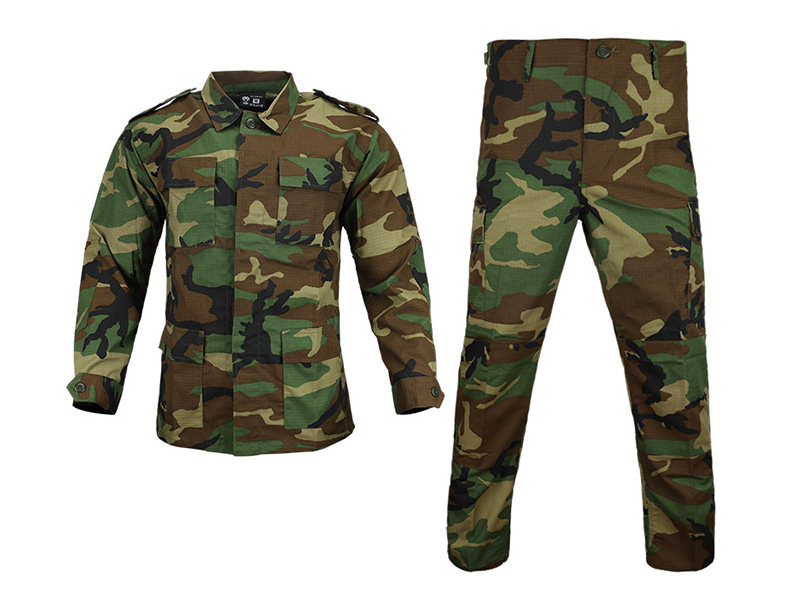
BDU stands for Battle Dress Uniform. It was officially introduced by the U.S. Army on October 1, 1981, replacing earlier combat clothing designs as the standard field uniform.
Traditional BDU uniforms became widely recognized for their woodland camouflage pattern and practical military styling.
The classic BDU design generally consists of a camouflage shirt or jacket and matching trousers. Its construction emphasizes functional storage, straightforward garment design, and durability for field use.
Although the U.S. Army replaced the BDU with the ACU, BDU-style uniforms remain relevant in commercial military apparel, tactical clothing, workwear, and outdoor applications.
Key Features of BDU Uniforms
1. Traditional Four-Pocket Design
One of the most recognizable features of classic BDU shirts is the four-pocket configuration.
Typical details include:
- Two chest pockets
- Two lower pockets
- Button or covered-button pocket closures
- Matching camouflage fabric across the garment
BDU trousers commonly feature front pockets, rear pockets, and side cargo pockets.
2. Classic Button Closure Design
Traditional BDU garments generally use button closures on the front and pockets.
This construction creates a straightforward design that is familiar to many military clothing buyers.
For customized versions, closure types and component specifications can be adjusted according to customer requirements.
3. Reinforced Construction
Durability is an important consideration in BDU-style clothing.
Common construction details may include reinforced seams, strengthened stress points, and additional fabric layers in selected areas.
These features help support repeated wear and everyday field applications.
4. Traditional Camouflage Patterns
Woodland camouflage is strongly associated with the classic BDU design.
However, BDU-style uniforms are not limited to woodland patterns. Depending on the manufacturer and project requirements, they can also be produced in desert camouflage, digital camouflage, solid colors, and other customized patterns.
5. Practical Fabric Options
BDU uniforms have historically been produced using cotton-nylon blends and cotton ripstop fabrics.
Modern commercial BDU-style uniforms may also use polyester-cotton blends and other suitable materials.
The final fabric specification should reflect the expected usage environment, desired garment weight, comfort requirements, and budget.
3. ACU vs. BDU: What Are the Main Differences?
Although ACU and BDU uniforms share a military-inspired appearance, their designs reflect different development priorities.
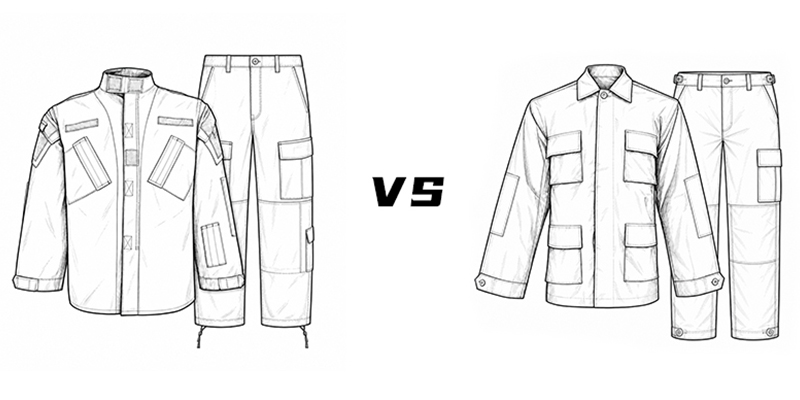
The BDU represents a more traditional military field uniform, while the ACU introduced updated functional details and a more modern approach to combat garment construction.
The following comparison highlights their main differences.
| Comparison | ACU Uniform | BDU Uniform |
|---|---|---|
| Full Name | Army Combat Uniform | Battle Dress Uniform |
| Historical Introduction | 2004 | 1981 |
| Design Style | Modern combat uniform | Traditional field uniform |
| Pocket Design | Often angled and redesigned pockets | Classic four-pocket shirt configuration |
| Front Closure | Commonly zipper-based in U.S. ACU versions | Traditionally button-based |
| Camouflage | Originally UCP, later OCP in U.S. Army use | Traditionally woodland, with other variants |
| Construction | More modern functional details | More traditional construction |
| Common Commercial Materials | Cotton-nylon, polyester-cotton, ripstop options | Cotton-nylon, polyester-cotton, ripstop options |
| Customization | Pattern, fabric, sizing, pockets, closures | Pattern, fabric, sizing, pockets, closures |
Important: These comparisons refer to traditional design characteristics and commonly recognized commercial styles. Actual specifications vary by country, military organization, uniform generation, and manufacturer. ACU and BDU are not universal technical specifications that automatically determine a particular fabric composition or camouflage pattern.
4. Understanding ACU and BDU Camouflage Patterns
Camouflage is one of the most visually distinctive elements of military uniforms. However, the pattern itself should be considered separately from the garment design.
Different camouflage patterns are developed to meet different visual and environmental requirements.
4.1 Woodland Camouflage
Woodland camouflage is traditionally associated with classic BDU uniforms.
Its combination of green, brown, black, and related tones creates a recognizable camouflage appearance commonly associated with wooded and vegetation-rich environments.
4.2 Desert Camouflage
Desert camouflage generally uses tan, beige, brown, and other earth-tone colors.
These patterns are designed around the visual characteristics of dry and arid environments.
4.3 Digital Camouflage
Digital camouflage uses pixelated or geometric shapes to create a distinctive visual pattern.
It became particularly recognizable through modern military uniform designs, including early ACU versions.
4.4 Operational Camouflage Patterns
Operational camouflage patterns are developed with specific environmental and operational considerations in mind.
The U.S. Army’s transition from the original UCP to OCP demonstrates how camouflage requirements can evolve over time.
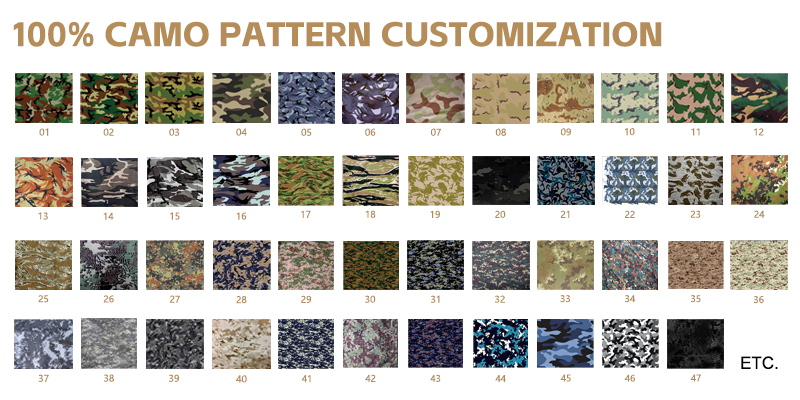
For wholesale buyers, it is important not to assume that every ACU uniform uses the same camouflage pattern or that every BDU uniform must use woodland camouflage.
When ordering customized uniforms, buyers should specify the exact pattern, color references, and approved artwork.
5. How to Choose the Right Fabric for ACU and BDU Uniforms
Fabric selection directly influences garment performance, appearance, and manufacturing cost.
For wholesalers and distributors, the choice of fabric should be based on the target market, intended application, and expected product positioning.
5.1 Polyester-Cotton Blends
Polyester-cotton fabrics combine the properties of both fibers.
Depending on the blend ratio and fabric construction, they can offer a practical balance of durability, comfort, dimensional stability, and maintenance convenience.
They are commonly considered for military-style clothing, workwear, and uniforms intended for regular use.
5.2 Cotton-Nylon Blends
Cotton-nylon blends are another option for military and tactical apparel.
They combine cotton’s natural hand feel with the strength and abrasion-related properties associated with nylon fibers.
Their suitability depends on the specific fabric construction and finishing process.
5.3 Ripstop Fabrics
Ripstop is a fabric construction rather than a fiber composition.
It uses reinforced threads arranged in a grid structure to help limit the spread of tears.
Ripstop fabrics are widely used in military-style clothing because they offer a practical combination of weight and tear resistance.
5.4 Fabric Weight and Performance
Fabric weight, typically measured in GSM, affects garment thickness, weight, and overall feel.
Lightweight fabrics may be considered for warm-weather applications, while heavier constructions may be suitable for garments requiring a more substantial structure.
When developing custom ACU or BDU uniforms, buyers should confirm:
- Fiber composition and blend ratio
- Fabric weight (GSM)
- Weave and construction
- Colorfastness requirements
- Shrinkage performance
- Fabric finishing requirements
- Relevant testing specifications
The most suitable fabric is not necessarily the heaviest or most expensive option. It should meet the actual requirements of the intended product.
6. ACU vs. BDU: Which Is Better for Different Applications?
There is no universal answer to which uniform is better. The right choice depends on the intended use, product specifications, customer preferences, and applicable requirements.
ACU-Style Uniforms
ACU-style garments may be suitable for buyers looking for a more modern combat uniform appearance with functional design details.
Potential applications include:
- Tactical clothing collections
- Military-style uniforms
- Training apparel
- Security and field clothing
- Customized uniform programs
Their updated pocket arrangements and design features may also appeal to customers who prioritize modern tactical styling.
BDU-Style Uniforms
BDU-style garments remain a practical option for buyers who prefer traditional military styling.
Potential applications include:
- Military surplus-inspired apparel
- Tactical and outdoor clothing
- Workwear collections
- Training uniforms
- Wholesale camouflage clothing
Their familiar construction and traditional appearance make them suitable for various commercial clothing programs.
For both styles, buyers should confirm that the selected specifications meet the intended application and any relevant customer or regulatory requirements.
7. What Should Wholesale Buyers Consider When Sourcing ACU and BDU Uniforms?
For bulk procurement, product selection is only one part of the sourcing process.
Buyers should also evaluate the manufacturer’s ability to maintain consistent specifications and support customization throughout production.
Here are six important factors to consider.
1. Product Specifications
Clearly define the uniform style, fabric composition, weight, camouflage pattern, pocket configuration, and garment measurements.
Providing technical drawings or reference samples can help avoid misunderstandings.
2. Customization Capabilities
Confirm whether the manufacturer can adjust fabric, colors, sizing, pocket layouts, closures, labels, and other product details according to your requirements.
3. Sample Development
Request a pre-production sample to evaluate appearance, fit, materials, and workmanship before approving bulk manufacturing.
4. Quality Control
Discuss how the manufacturer checks raw materials, production workmanship, garment measurements, and finished products.
An agreed inspection standard is especially important for repeat orders.
5. Minimum Order Quantity and Pricing
MOQ and pricing may vary according to fabric selection, customization requirements, order volume, and material sourcing arrangements.
Request a detailed quotation based on your actual specifications.
6. Production and Delivery Coordination
Confirm the production schedule, packaging requirements, shipping arrangements, and expected delivery timeline before placing the order.
A well-organized sourcing process helps reduce unnecessary revisions and supports more predictable order management.
8. Custom ACU and BDU Uniform Manufacturing with KMS
For wholesalers, distributors, and brands, finding a manufacturing partner that understands both product specifications and customization requirements is essential.
At KMS, we focus on military and tactical apparel manufacturing and supply solutions for international B2B customers.
Our product range includes ACU-style uniforms, BDU-style uniforms, French-style uniforms, various camouflage clothing, field uniforms, and other military apparel.
We support customization discussions based on customer-provided specifications, reference images, and existing product designs.
Depending on project requirements, customization may include:
- Fabric composition and weight
- Camouflage patterns and colors
- Shirt and trouser designs
- Pocket configurations
- Stitching and reinforcement details
- Size charts and garment measurements
- Labels, logos, and packaging
With over 20 years of industry and export experience, KMS understands the importance of coordinating product development, material sourcing, production requirements, and quality management for international orders.
Whether you are sourcing traditional BDU-style uniforms or developing customized ACU-style garments, our team can work with you to evaluate your requirements and discuss suitable manufacturing solutions.

Conclusion: Choosing Between ACU and BDU Uniforms
ACU and BDU uniforms represent two important styles in military apparel.
While ACU designs are associated with more modern combat uniform features, BDU designs retain the traditional characteristics of classic military field clothing.
The right choice depends on the intended application, garment construction, fabric requirements, camouflage preferences, and customer expectations.
For wholesale buyers, clearly defining these requirements before production is essential to achieving consistent product quality and successful bulk orders.
Looking for a reliable partner for custom ACU or BDU uniforms?
Contact KMS to discuss your military uniform requirements, explore customization options, and request a wholesale quotation.